
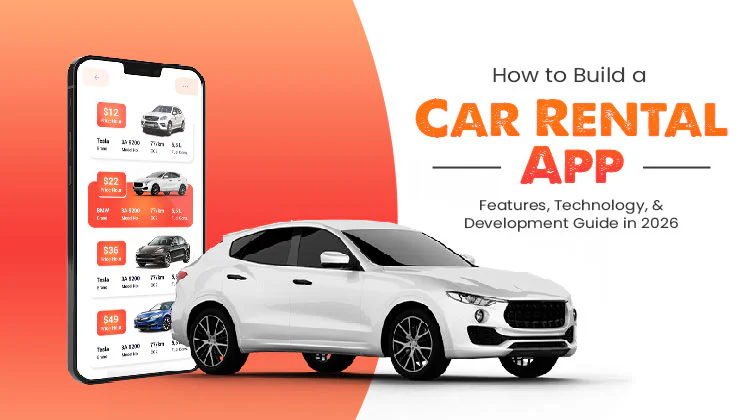
How to Build a Car Rental App: Features, Technology, and Development Guide in 2026
The mobility sector in 2026 is no longer defined by physical counters and paper contracts. For business owners, the transition to a digital-first model is a prerequisite for survival. Whether you manage a boutique fleet of luxury vehicles or a large-scale commercial operation, your success hinges on the quality of your car rental app.
Today's users expect a seamless, "one-tap" experience. They want to find, book, and unlock a vehicle without human intervention. To meet these demands, savvy entrepreneurs are investing in professional car rental app development to create ecosystems that automate operations and maximize fleet utility. This guide explores the essential components of building the best car rental app for the modern market and why choosing the right app development company is your most critical business decision this year.
The Shift to Digital: Why a Car Rental App is Mandatory in 2026
The landscape of transportation has shifted toward "Access over Ownership." Across major global cities, consumers are moving away from the costs of maintaining personal vehicles in favor of flexible, on-demand rentals.
For a business owner, a car rental app serves as more than just a booking tool—it is your primary storefront, your customer service representative, and your fleet manager. Relying on manual bookings in 2026 leads to high administrative overhead and lost revenue. By embracing mobile app development, you can offer 24/7 availability, real-time tracking, and automated billing, ensuring your fleet never sits idle.
Core Features of a High-Performance Car Rental App
To be considered the best car rental app in a crowded market, your platform must balance user convenience with robust backend management. High-quality car rental app development focuses on three distinct interfaces: the User App, the Fleet Owner Dashboard, and the Driver/Service App.
1. Advanced Search and Smart Filters
Users should be able to filter vehicles by type, fuel efficiency, transmission, and price. In 2026, integration of AI-driven recommendations based on past user behavior is a standard feature in professional mobile app development.
2. Seamless Booking and Real-Time Availability
A real-time synchronization engine is vital. There is nothing more damaging to a brand than a "double booking." Your car rental app must reflect instant fleet status to ensure reliability.
3. Secure Payment Gateway Integration
In the digital age, security is paramount. Your app development company should integrate multi-currency, secure payment gateways that support credit cards, digital wallets, and "Buy Now, Pay Later" options.
4. Document Verification (OCR & KYC)
Modern car rental app development utilizes Optical Character Recognition (OCR) to allow users to scan their driving licenses and ID documents. This automates the Know Your Customer (KYC) process, enabling instant verification and reducing the time spent at physical kiosks.
5. GPS Tracking and Telematics
For the owner, knowing the exact location of the asset is crucial. Integrated GPS not only helps the user find the car but also allows the owner to monitor vehicle health, fuel levels, and unauthorized boundary crossings.
Key Technology Trends in 2026
The technological foundation of mobile app development has evolved. To build a future-proof platform, your app development company must utilize a modern tech stack that prioritizes speed and security.
• Internet of Things (IoT) Integration: In 2026, the best apps include keyless entry systems. Users can unlock their assigned vehicle via Bluetooth or NFC directly through the car rental app.
• Blockchain for Transparency: Smart contracts are increasingly used in car rental app development to manage insurance agreements and maintenance logs, ensuring an immutable record of the vehicle’s history.
• AI-Powered Analytics: Use predictive modeling to determine peak demand periods. This allows you to implement dynamic pricing, a feature often found in the best car rental app solutions to optimize profit margins.
The Development Process: Steps to Success
Building a successful product requires a structured approach to mobile app development. Working with an experienced app development company typically involves the following phases:
Phase 1: Market Research and Conceptualization
Before writing a single line of code, define your niche. Are you targeting long-term corporate rentals or short-term city hops? This decision will dictate the core functionality of your car rental app.
Phase 2: UI/UX Design
User experience is the heartbeat of any mobile platform. A cluttered interface will drive users to competitors. The design should be intuitive, requiring minimal taps to complete a booking.
Phase 3: The Development Sprint
This is where the car rental app development happens. Using agile methodologies, the app development company builds the frontend and backend concurrently, ensuring that all features—from the map interface to the payment logic—work in harmony.
Phase 4: Rigorous Quality Assurance
Testing is non-negotiable. Your mobile app development partner must conduct load testing, security audits, and cross-platform checks to ensure the app performs flawlessly under high traffic.
Phase 5: Launch and Maintenance
Launching the car rental app is just the beginning. Continuous updates, bug fixes, and feature additions based on user feedback are necessary to maintain your status as the best car rental app in your region.
Choosing the Right App Development Company
The success of your digital transformation depends on the expertise of your partner. When searching for an app development company, look for a team that understands the nuances of the rental industry. They should offer:
• End-to-End Solutions: From initial consulting to post-launch support.
• Scalability: The ability to ensure your car rental app can handle five cars today and five thousand tomorrow.
• Customization: Avoid "cookie-cutter" templates. Your business is unique, and your mobile app development should reflect your specific brand values and operational workflows.
ROI: How Custom App Development Boosts Your Bottom Line
Investing in professional car rental app development provides a massive Return on Investment. By automating the booking process, you reduce the need for physical staff and office space. Furthermore, the data gathered by your car rental app provides invaluable insights into customer preferences, allowing for hyper-targeted marketing campaigns.
|
Feature Benefit |
Impact on Business |
|
Automation |
40% Reduction in Admin Costs |
|
24/7 Booking |
25% Increase in Fleet Utilization |
|
In-App Upselling |
Higher Average Order Value (AOV) |
|
Digital Verification |
Faster Turnaround Times |
Conclusion: Securing Your Future in the Rental Market
As we move through 2026, the gap between traditional rental firms and tech-enabled businesses is widening. A custom car rental app is no longer a luxury—it is the engine of your growth. It streamlines your operations, builds trust with your users, and provides the scalability needed to dominate the market.
By focusing on high-quality car rental app development and partnering with a visionary app development company, you can create a platform that doesn't just list cars but delivers an unparalleled travel experience. The future of mobility is mobile; ensure your business is leading the way.
Are you ready to build the next best car rental app? Our team is dedicated to cutting-edge mobile app development that empowers business owners to scale effortlessly. Let’s turn your vision into a digital reality.
You May Also Read
Car Rental App Development: Top Challenges and Practical Solutions
Sayantan Santra
Associate Mobile App Developer, Idiosys Tech
An Associate Mobile App Developer with 2+ years of experience, creates sleek and user-friendly apps. Skilled in both Android and iOS development, he focuses on delivering smooth performance and engaging user experiences.