Build a Subscription-Based E-commerce Website for Recurring Revenue
The traditional e-commerce model is a relentless treadmill. You spend valuable marketing dollars to acquire a customer, fulfill their single order, and then immediately start back at zero, hunting for the next conversion. It is an exhausting, expensive cycle that leaves your monthly revenue unpredictable and your business vulnerable to market fluctuations.
But what if you could flip the script? Imagine waking up on the first day of the month already knowing exactly how much revenue your store will generate.
This is the power of predictable cash flow. By shifting focus from transactional sales to relationship-driven commerce, businesses are unlocking massive growth. If you want to secure long-term stability, you need to learn how to create ecommerce website experiences that prioritize customer lifetime value over one-off transactions. Building a subscription-based e-commerce website transforms casual shoppers into loyal, recurring advocates.
What is Subscription E?commerce?
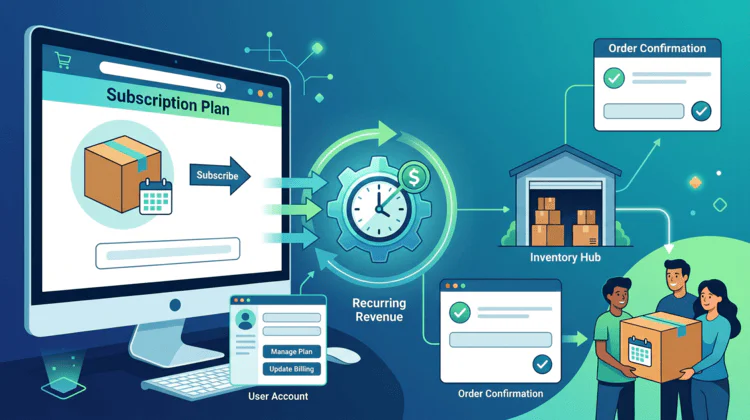
At its core, subscription e-commerce is a business model where customers pay a recurring fee—weekly, monthly, or annually—in exchange for the regular delivery of physical products or digital services. Instead of treating purchasing as a singular event, this model treats commerce as an ongoing relationship.
For merchants, the benefits are game-changing. It dramatically lowers customer acquisition costs (CAC) over time, stabilizes supply chain forecasting, and exponentially increases customer lifetime value (LTV). For consumers, it offers unparalleled convenience, personalization, and often, cost savings.
The Four Pillars of Subscription Models
Before you dive into e commerce website development, you must decide how your products will be packaged and perceived. Most successful recurring brands fall into one of four primary categories.
1. The Curation Model (The Discovery Box)
This model thrives on surprise and delight. Brands curate a selection of personalized, niche products and ship them to the subscriber's door. Think beauty boxes, specialty coffee, or artisan snacks. The value lies in curation, expert selection, and the joy of unboxing something new.
2. The Replenishment Model (The Convenience Saver)
Replenishment focuses on commodities that people use routinely and run out of consistently. Razors, pet food, diapers, and household cleaning supplies are perfect fits. Customers subscribe to save time and money, ensuring they never face the frustration of an empty cupboard.
3. The Access and Membership Model (The VIP Club)
Here, customers pay a recurring fee not necessarily for a specific physical product each month, but for exclusive perks. This can include members-only discounts, early access to new product drops, or free expedited shipping. It leverages the psychological power of community and insider status.
4. The Hybrid Model (The Best of Both Worlds)
Many modern brands do not limit themselves to just one approach. A hybrid model allows traditional digital storefronts to sell individual items while simultaneously offering a subscription option on product pages (e.g., "Buy once for $20, or Subscribe & Save 15%"). This lowers the barrier to entry for hesitant shoppers.
The Core Technical Infrastructure You Need
To build an e-commerce website capable of handling complex recurring transactions, your standard shopping cart setup will not suffice. The technical architecture must be robust, secure, and highly flexible.
+-----------------------------------------------------------------------+
| Frontend User Experience |
| (Product Pages, Cart, Subscriber Self-Service) |
+-----------------------------------------------------------------------+
|
v
+-----------------------------------------------------------------------+
| Flexible Subscription APIs |
| (Handles Logic, Frequency Rules, and Plan Pricing) |
+-----------------------------------------------------------------------+
|
v
+-----------------------------------------------------------------------+
| Recurring Billing Engine |
| (Automated Invoicing & Tokenized Transactions) |
+-----------------------------------------------------------------------+
|
v
+-----------------------------------------------------------------------+
| Secure Payment Gateway |
| (Stripe, PayPal, Braintree) |
+-----------------------------------------------------------------------+
First, you require a specialized recurring billing engine. Unlike a standard checkout that processes a card once, a recurring engine securely tokenizes payment credentials to safely authorize charges at specified intervals without manual user intervention.
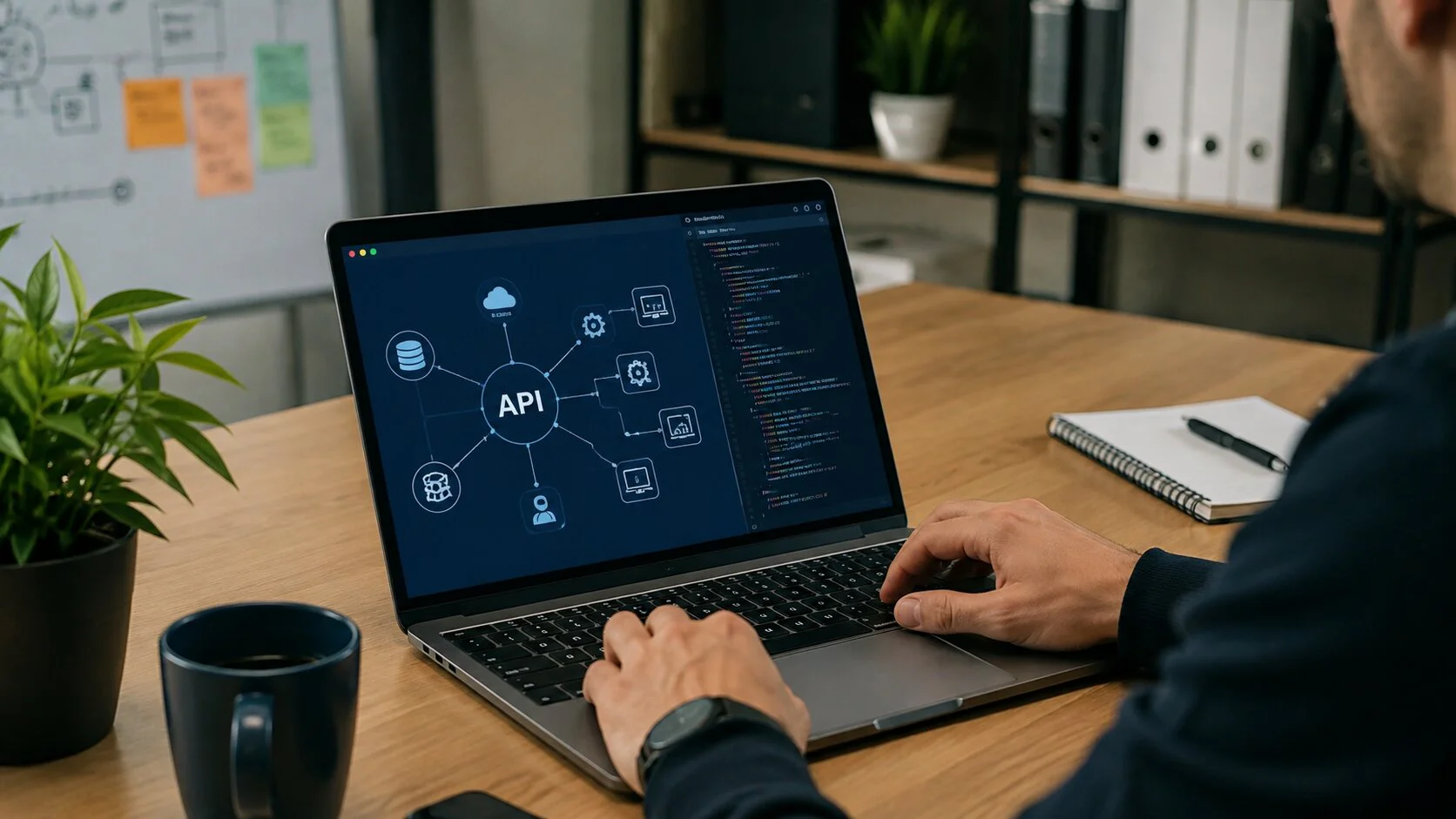
Second, your system relies heavily on flexible subscription APIs. These application programming interfaces allow your frontend design to communicate seamlessly with your backend database, managing variables like custom delivery frequencies, sudden plan upgrades, and seasonal pauses.
Finally, seamless payment gateway integration is non-negotiable. Utilizing globally trusted processors like Stripe, PayPal, or Braintree ensures compliance with strict PCI-DSS security standards while supporting local payment methods, which drastically reduces friction at checkout.
The Power of Composable Architecture
Monolithic, all-in-one platforms often struggle with the unique demands of a scaling subscription business. They lock you into rigid templates and rigid rules. That is why modern engineering favors a composable architecture.
By mixing independent APIs, real-time webhooks, and specialized extension points, you can build custom subscription logic tailored precisely to your operational workflows. For instance, when a subscription charge succeeds, a webhook can instantly trigger a personalized thank-you SMS via Twilio, update your CRM, and push an automated packing order to your warehouse team. This modular approach ensures your platform can adapt instantly to changing consumer trends without requiring a complete system overhaul.
Essential Features for Modern Subscribers
A flawless user experience is what keeps subscribers from hitting the cancel button. When designing your subscription-based e-commerce website, ensure these core features are baked into the blueprint.
- Tiered Pricing Plans: Offer multiple entry points, such as Basic, Standard, and Premium tiers, to accommodate different customer budgets and usage frequencies.
- Automated Renewals & Notifications: Transparency builds trust. Send automated, friendly email alerts a few days before a renewal payment is processed.
- Dunning Management: Credit cards expire, get lost, or hit spending limits. Dunning management automatically retries failed payments on an optimized schedule and prompts users to update their billing details before canceling their service.
- Subscriber Self-Service Portals: Give users complete control. Customers should be able to pause a shipment, skip a month, swap a product flavor, or update their delivery address with a few simple clicks, reducing pressure on your customer support team.
Aligning Subscriptions with Real-Time Inventory
One of the biggest operational hurdles in running a recurring storefront is backend logistics. If thousands of recurring orders process simultaneously on the first of the month, your inventory management must be completely synced to prevent stockouts.
You must design subscription-specific inventory allocation rules. This means reserving a portion of your incoming stock exclusively for active subscribers before opening up remaining inventory to casual, one-time shoppers.
Furthermore, your fulfillment workflows must be optimized to handle batch processing. Integrating your website with a smart Warehouse Management System (WMS) ensures that labels print automatically, picking routes are optimized, and tracking numbers are instantly communicated back to the subscriber's account portal.
Analytics That Drive Retention
You cannot manage what you do not measure. In a recurring revenue model, traditional retail metrics like conversion rate take a backseat to deeper, cohort-based analytical data.
Monthly Recurring Revenue (MRR)
MRR is the lifeblood of your business. It calculates the total predictable revenue your store expects to receive every single month. Tracking this figure helps you understand your baseline growth trajectory.
Churn Rate
Churn measures the percentage of subscribers who cancel their plans within a given timeframe. Even a minor reduction in your customer churn rate can lead to an exponential increase in total profitability over time.
Customer Lifetime Value (LTV)
LTV represents the total net profit your business expects to earn from a single customer over the entire duration of their relationship with your brand.
Subscription Cohort Analysis
This advanced analytical method groups subscribers based on the specific month they signed up. By tracking these distinct cohorts over time, you can pinpoint exactly when user engagement drops off, allowing you to proactively introduce targeted retention campaigns.
Why Idiosys is the Ideal Engineering Partner
Building a highly scalable digital ecosystem requires a deep understanding of complex software integrations. You need an engineering partner that understands how to transition your vision into an optimized digital reality.
Idiosys specializes in advanced e commerce website development designed for modern enterprises. They engineer custom subscription e-commerce platforms, including their proprietary solution, Idiocom, which features robust recurring billing architectures and frictionless subscriber management panels.
Whether you want to build a bespoke system from scratch or transform your existing e-commerce marketplace into a recurring revenue powerhouse, Idiosys provides the technical expertise needed to scale your business safely. They remove the technical complexity of API management, payment routing, and dunning setups so you can focus entirely on sourcing great products and delighting your customer base.
Transform Your Digital Strategy Today
The future of digital commerce belongs to brands that build deep, lasting relationships with their audience. Shifting away from one-off transactions and embracing a recurring revenue model is the single most effective way to secure long-term business stability and value.
Are you ready to build a predictable, scaling digital storefront? Contact the engineering experts at Idiosys today to create a custom subscription-based e-commerce website tailored precisely to your brand's unique operational needs.
You May Also Read
eCommerce Website Development for Fashion Brands with Global Audiences
Affordable Ecommerce Website Development for SMEs
Why Ready-Made E-commerce Platforms Are Winning
How to Launch an E-commerce Store in 24 Hours
Sumit Kumar Paramanik
Senior Full Stack Web Developer, Idiosys Tech
A dynamic Senior Full Stack Web Developer and team lead, turns ideas into powerful digital solutions. Mastering both front-end and back-end, he inspires his team to deliver scalable, high-impact projects that elevate user experience.