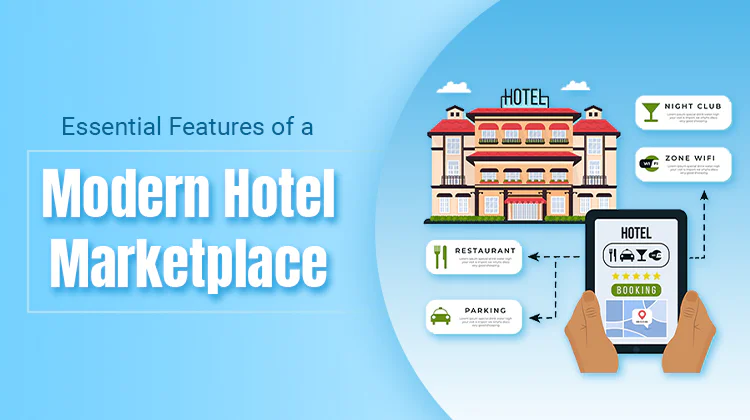
Essential Features of a Modern Hotel Marketplace
The hospitality industry has entered a new digital era. Travelers no longer search for individual hotel websites one by one—they expect platforms that allow them to compare, explore, and book accommodations instantly. At the same time, hotel owners, homestay operators, and Airbnb hosts want more control over bookings, pricing, and guest relationships.
This shift has made the hotel marketplace model the foundation of modern hospitality technology. Unlike traditional booking websites, a marketplace connects multiple properties, manages real-time inventory, and delivers a seamless booking experience across devices.
However, not every platform qualifies as a true marketplace. To succeed, a hotel booking platform must be built with specific features that support scalability, usability, automation, and long-term growth. In this guide, we break down the essential features of a modern hotel marketplace, explain why they matter, and show how forward-thinking hospitality businesses use them to stay competitive.
Why Features Define Marketplace Success
Many hotel owners assume that launching a booking website is enough. In reality, technology expectations have changed. A basic website with a booking form cannot support multi-property growth, real-time pricing, or personalized guest journeys.
Modern hotel marketplace development focuses on building an ecosystem rather than a static website. Features are not add-ons—they are the backbone of performance, revenue, and guest satisfaction.
A strong feature set ensures:
• Faster bookings
• Better guest trust
• Higher direct revenue
• Lower operational workload
• Scalability across locations
Without these capabilities, even the best-designed marketplace struggles to perform.
Multi-Property Listing Architecture
At the core of every successful hotel marketplace is the ability to manage multiple properties within a single system. This feature allows hotel chains, homestay groups, and Airbnb hosts with multiple listings to display all their accommodations in one unified environment.
Each property must support rich content, including room types, images, amenities, policies, and pricing. Guests benefit from easier comparison, while owners gain centralized control.
From a development standpoint, this architecture is what separates true marketplaces from simple hotel booking website development projects.
Real-Time Availability and Inventory Sync
A modern hotel marketplace must operate in real time. Guests expect accurate availability, and property owners need confidence that rooms will not be overbooked.
Real-time inventory management ensures that:
• Room availability updates instantly
• Pricing changes reflect immediately
• Cancellations sync across the platform
• Multiple properties remain aligned
This feature is especially critical for businesses listing rooms across multiple channels. Without it, operational errors increase and guest trust declines.
Advanced Search and Smart Filtering
Search is one of the most influential features in a hotel booking platform. Guests often arrive with specific expectations—location, price range, room type, amenities, or stay duration.
A modern marketplace must support intelligent filtering that helps users find the right accommodation quickly. Well-designed search functionality improves conversion rates, reduces bounce rates, and enhances user experience.
This is not just a UX feature; it directly impacts revenue.
Secure Booking and Payment Processing
Trust is central to hospitality. Guests need to feel safe when entering personal and payment information, especially when booking from international locations.
A robust hotel marketplace includes:
• Secure payment gateways
• Encrypted transactions
• Transparent pricing breakdowns
• Automated confirmation workflows
This feature protects both guests and property owners while ensuring smooth financial operations. For global platforms, multi-currency and region-specific payment support become equally important.
Unified Dashboard for Property Owners
One of the most valuable features for hotel owners and homestay operators is a centralized dashboard. This interface allows owners to manage their entire business without technical complexity.
Through a unified dashboard, owners can:
• Add or edit rooms
• Update pricing and availability
• Track bookings and revenue
• Manage guest communications
• Handle cancellations and refunds
This feature reduces reliance on manual processes and minimizes operational stress, particularly for small teams.
Mobile-First User Experience
Today’s travelers plan and book stays on their phones. A modern hotel marketplace must prioritize mobile usability, not treat it as an afterthought.
Mobile-first design ensures:
• Fast loading on slower networks
• Easy navigation on small screens
• Quick checkout experiences
• Higher conversion rates
Whether delivered through responsive web design or a dedicated app, mobile optimization is no longer optional for hotel marketplace development.
Guest Profiles and Personalization
Modern guests expect personalized experiences. A feature-rich hotel booking platform collects and organizes guest data responsibly to improve future interactions.
Personalization can include:
• Saved preferences
• Booking history
• Customized offers
• Location-based recommendations
These capabilities improve loyalty and encourage repeat bookings—especially valuable for boutique hotels and homestays.
Reviews and Ratings System
Transparency builds confidence. A built-in review and rating system allows guests to share feedback and helps future travelers make informed decisions.
For property owners, reviews offer insights into service quality and improvement areas. For marketplaces, they strengthen credibility and trust—key drivers of booking behavior.
Multi-Language and Multi-Currency Support
A global hotel marketplace must cater to international travelers. Language barriers and unfamiliar currencies often prevent conversions.
Supporting multiple languages and currencies enables:
• Wider global reach
• Better user comfort
• Higher international bookings
This feature is particularly important for destinations attracting tourists from multiple regions.
Automation and Smart Notifications
Automation reduces workload while improving responsiveness. A modern hotel marketplace should automate key workflows such as:
• Booking confirmations
• Cancellation alerts
• Payment notifications
• Pre-arrival messages
• Post-stay follow-ups
Automation improves guest experience and frees hotel teams to focus on service rather than administration.
Scalability and Performance Optimization
Growth should not require rebuilding your platform. A well-engineered marketplace scales smoothly as new properties, users, and regions are added.
Scalable infrastructure ensures:
• Stable performance during peak seasons
• Faster page load times
• Secure data handling
• Future-ready expansion
This is where partnering with an experienced hotel marketplace development company becomes critical.
Analytics and Business Insights
Data drives better decisions. A modern hotel marketplace provides insights into:
• Booking trends
• Revenue performance
• User behavior
• Conversion rates
• Seasonal demand
These analytics help property owners optimize pricing, marketing, and inventory strategies.
How Technology Partners Enable These Features
Building all these features requires deep technical expertise and hospitality domain knowledge. A capable hotel marketplace development company understands not only how to build features, but how they interact within a real-world booking ecosystem.
Companies like Idiosys Tech focus on developing scalable hotel marketplaces that combine performance, security, and user experience under one unified platform.
Why Feature-Driven Marketplaces Outperform Websites
Traditional booking websites are limited by design. They work well for single properties but struggle to support multi-vendor growth, automation, and personalization.
In contrast, feature-rich marketplaces:
• Scale faster
• Reduce OTA dependency
• Improve guest satisfaction
• Increase direct revenue
• Simplify operations
This is why hospitality brands worldwide are transitioning from basic hotel booking website development to full marketplace ecosystems.
Who Should Invest in a Modern Hotel Marketplace
A feature-driven hotel marketplace is ideal for:
• Hotel groups managing multiple locations
• Homestay networks
• Airbnb hosts with several properties
• Vacation rental businesses
• Destination-focused booking platforms
Such businesses often work with specialized teams like Idiosys Tech to ensure their platform supports growth without technical limitations.
Conclusion: Features Shape the Future of Hospitality
The success of a hotel marketplace is defined not by appearance alone, but by the strength of its features. Real-time inventory, secure payments, mobile-first design, automation, and scalability are no longer advanced options—they are essential.
For hotel owners, homestay operators, and Airbnb hosts, investing in a modern hotel booking platform means building a future-ready digital foundation that adapts to changing guest expectations.
With the right feature strategy and an experienced development partner like Idiosys Tech, hospitality businesses can build marketplaces that deliver long-term value, higher revenue, and better guest experiences.
--------------------------------------------------------------------------------------
What makes a modern hotel marketplace different from a regular booking website?
A hotel marketplace supports multiple properties, real-time availability, and centralized management, while a regular booking website usually serves only one property.
Why are essential features so important in hotel marketplace development?
Features like dynamic search, secure payments, owner dashboards, and mobile-first design ensure smooth guest experience and efficient property management.
Do small hotels and homestays benefit from marketplace features?
Yes. Even single-property owners gain better visibility, streamlined operations, and improved booking rates through marketplace-level tools and automation.
What is the most important feature for a hotel booking platform?
Real-time availability and pricing updates are critical—they prevent double bookings and ensure guests always see accurate information before confirming a stay.
How does a hotel marketplace improve guest experience?
It offers faster search, clear comparisons, secure checkout, transparent pricing, and instant confirmation—making the booking process effortless.
Can I customize my hotel marketplace features based on my business needs?
Absolutely. Modern development companies can tailor dashboards, booking engines, payment workflows, and guest communication tools to suit any hospitality model.
--------------------------------------------------------------------------------------
You May Also Read
Future-Proofing Your Hotel Marketplace: Preparing for Voice Search and AI-Driven Bookings
Hotel Marketplace Development: The Complete Guide for Modern Hospitality
White-Label Hotel Marketplace vs. Custom-Built Platform: Which One Is Right for Your Business?
Shreya Roy
Junior Full Stack Web Developer, Idiosys Tech
A Junior Full Stack Web Developer with 1.5+ years of experience, builds responsive and user-friendly websites. Skilled in both front-end and back-end technologies, she is passionate about creating efficient and scalable digital solutions.