B2B vs B2C Marketplace Development: Key Differences Every Founder Needs to Understand Before Building
Online marketplaces have become central to modern digital commerce. They allow multiple sellers to reach buyers through one platform while the marketplace owner manages transactions, commissions, services and customer experiences.
However, a marketplace built for individual consumers is very different from one created for manufacturers, wholesalers, suppliers or corporate buyers. The target audience affects everything from pricing and checkout to account permissions and technology architecture.
Understanding B2B vs B2C marketplace development before building helps founders avoid incorrect feature planning, weak user adoption and expensive redevelopment. It also helps them choose the right business model, platform structure and integration strategy.
This guide explains the major differences founders must evaluate before investing in marketplace development.
What Is a B2B Marketplace?
- A B2B marketplace is a digital platform where businesses sell products or services to other businesses. Its users may include manufacturers, distributors, wholesalers, suppliers, retailers and corporate procurement teams.
- Transactions are usually larger and more complex than consumer purchases. Buyers may request quotations, negotiate prices, review compliance documents and seek internal approval before placing an order.
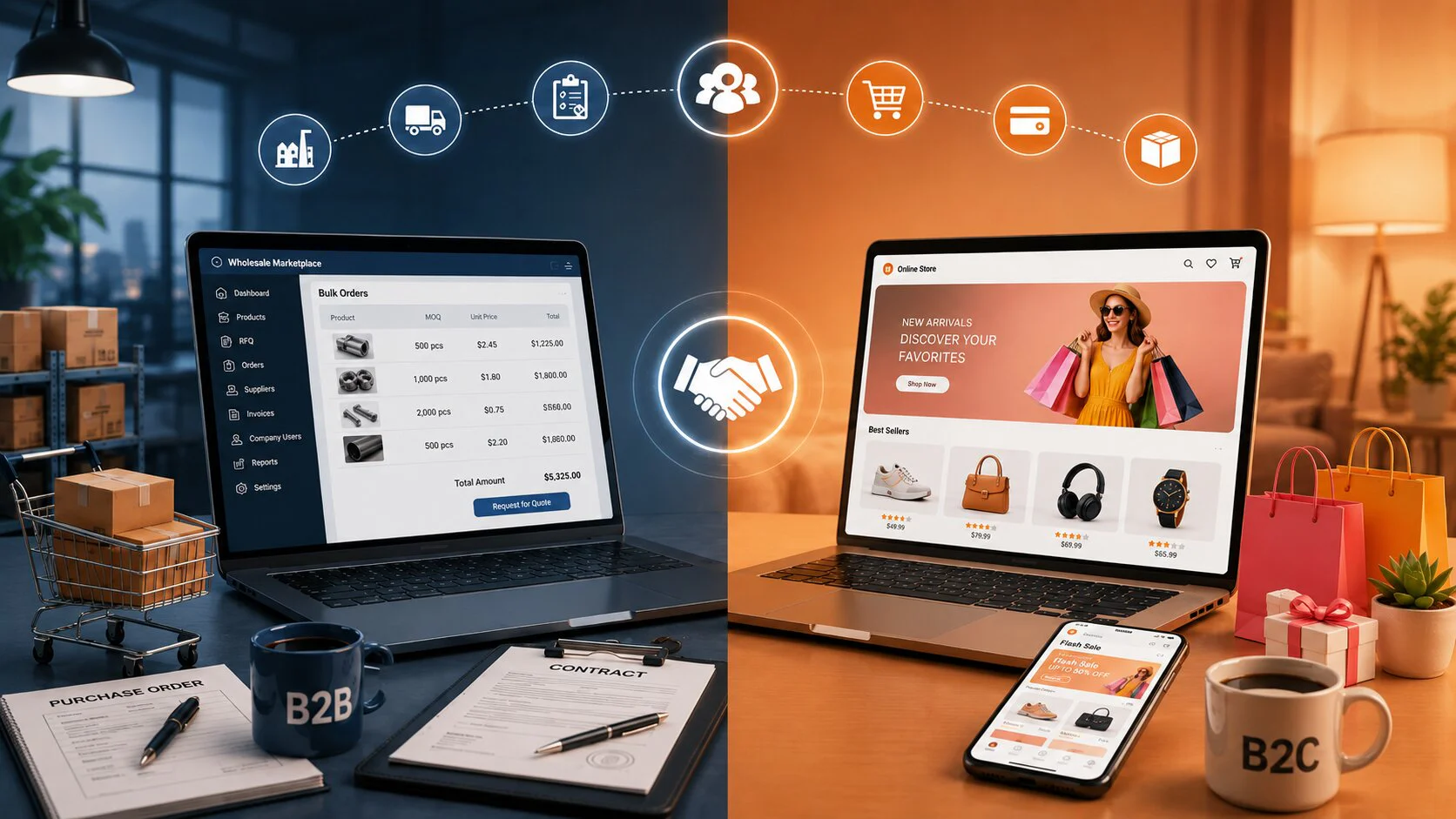
- A B2B marketplace is not merely an online product catalog. It can function as a complete procurement and supply-chain ecosystem. It may support supplier discovery, contract management, bulk purchasing, invoicing and recurring orders.
- The most important B2B ecommerce marketplace features often include company accounts, custom pricing, bulk-order tools, approval workflows, quotation requests and ERP integrations.
What Is a B2C Marketplace?
- A B2C marketplace allows businesses or independent sellers to sell directly to individual consumers. These platforms are commonly used for fashion, electronics, food, beauty products, home goods and digital services.
- B2C buying journeys are normally shorter. A customer discovers a product, compares available options, reads reviews and completes payment.
- The marketplace must make this experience fast and convenient. Features such as personalized recommendations, ratings, promotions and simplified checkout help increase conversions.
- B2C marketplace development therefore focuses strongly on product discovery, visual appeal, customer engagement and mobile shopping.
The Main Difference Between B2B and B2C Online Marketplaces
The main difference between B2B and B2C online marketplace models lies in who buys and how they make decisions.
A B2C buyer usually purchases for personal use. The decision may be influenced by price, convenience, delivery speed, reviews and brand perception.
A B2B buyer purchases for an organization. The decision may affect budgets, operations and long-term supplier relationships. It often involves procurement managers, finance teams, department heads and senior decision-makers.
A customer may purchase one office chair within minutes. A company ordering 500 office chairs may require samples, negotiated prices, delivery schedules and managerial approval. These different behaviours require different platform workflows.
Target Audience and Buying Journey
B2C marketplaces target individual shoppers who expect quick navigation and minimal purchasing friction. They want to search products, compare prices and check out without unnecessary steps.
The B2C journey is usually transactional:
- Product discovery → Comparison → Cart → Payment → Delivery.
- B2B buying journeys are longer because business buyers evaluate suppliers as well as products.
The B2B journey may include:
- Requirement identification → Supplier search → Qualification → Quotation → Negotiation → Approval → Order.
- This longer process means B2B platform development must support supplier evaluation, communication and approval workflows. A simple consumer-style buying journey is rarely enough for business procurement.
Marketplace Business and Revenue Models
B2C marketplaces usually rely on large transaction volumes. Common revenue sources include commissions, seller subscriptions, advertising and featured listings.
Individual order values may be relatively small. However, a large number of daily transactions can generate substantial revenue.
B2B marketplaces often process fewer orders with higher values. Their revenue models may include transaction commissions, supplier subscriptions, premium accounts, lead-generation fees and enterprise services. Some B2B platforms also generate income from analytics, logistics or financing support.
Founders must align the revenue model with how vendors sell and how buyers purchase. A model designed only for low-value transactions may not suit a marketplace where purchases are negotiated and recurring.
Product Catalog Management
B2C catalogs focus on helping shoppers make fast decisions. Product pages usually include images, descriptions, prices, ratings, reviews and available variations.
B2B catalogs require more detailed information. Buyers may need technical specifications, packaging information, product codes, certificates, minimum order quantities and manufacturing standards.
Therefore, B2B marketplace software must support complex product data and advanced filtering. The catalog structure should be planned before development because it affects search, database architecture and seller dashboards.
Businesses managing technical specifications, bulk pricing and large product databases often need custom ecommerce development to create a catalog structure that supports both buyers and vendors efficiently.
Pricing and Quotation Systems
B2C marketplaces typically display fixed prices. Promotions and personalised discounts may be offered but the basic pricing model remains straightforward. B2B pricing can vary by order quantity, customer type, location, contract terms and purchase history.
A small retailer may receive one price while a national distributor receives another. Important B2B pricing capabilities include:
-
Tiered or volume pricing
-
Customer-specific prices
-
Contract-based pricing
-
Request for quotation workflows
-
Negotiated commercial terms
These are core B2B ecommerce marketplace features because business buyers often expect flexibility before confirming high-value orders.
Checkout and Ordering Workflows
B2C checkout should be short. Customers usually confirm their address, select a payment method and place the order. Every unnecessary field can increase cart abandonment.
B2B ordering can involve purchase orders, credit limits, tax documents, approval stages and multiple delivery locations. Businesses may also need partial shipments or recurring orders.
For example, an employee may create an order but a department manager may need to approve it before submission.
This is why B2B platform development requires customised ordering workflows rather than a standard retail checkout.
Company Accounts and User Permissions
B2C platforms typically have individual customer accounts and seller accounts.
B2B marketplaces often need organisational profiles with multiple users under one company. These users may include procurement officers, finance managers, administrators and warehouse teams.
Each role may require different access.
A procurement employee may prepare an order. A manager may approve it. A finance user may access invoices without changing product requirements.
Role-based permissions must be included early in the development strategy. Adding organisational hierarchies after launch can require major changes to user and order databases.
Vendor Onboarding and Management
B2C seller onboarding generally focuses on identity verification, product quality, order fulfilment and customer ratings.
B2B supplier onboarding is usually more detailed. The marketplace may need to verify company registrations, industry certifications, manufacturing capacity and compliance records. A supplier failure in a B2B environment can interrupt another company’s business operations. Vendor credibility is therefore critical.
Effective B2B marketplace software should support supplier applications, document verification, approvals, contract management and performance tracking.
Search and Product Discovery
B2C search is designed around customer language. Users may search by product type, brand, price, colour or popularity.
B2B search requires more precision. Business buyers may search by part number, specification, supplier location, minimum order quantity or certification.
Advanced filters and specification comparisons help buyers find products that meet operational requirements. Search is not simply a convenience in a B2B marketplace. It is an important procurement tool that can directly influence whether buyers trust the platform.
Payment and Financial Processes
B2C marketplaces normally support cards, digital wallets, bank transfers and buy-now-pay-later options. Payment is often completed immediately. B2B transactions may use invoices, purchase orders, credit terms, partial payments and recurring billing.
The platform may also need to generate tax documents and synchronise financial records with accounting software. These requirements add complexity to B2B vs B2C marketplace development.
Logistics and Order Fulfilment
B2C fulfilment focuses on individual delivery, shipment tracking, returns and delivery notifications.
B2B fulfilment can involve pallets, bulk freight, international shipping and multiple warehouses. One order may be divided across several business locations.
A B2B marketplace may need to connect with warehouse management systems, transport platforms and ERP software.
Founders must decide whether the marketplace will only facilitate transactions or also manage fulfilment. This decision has a major impact on development cost and operations.
Technology Architecture and Integrations
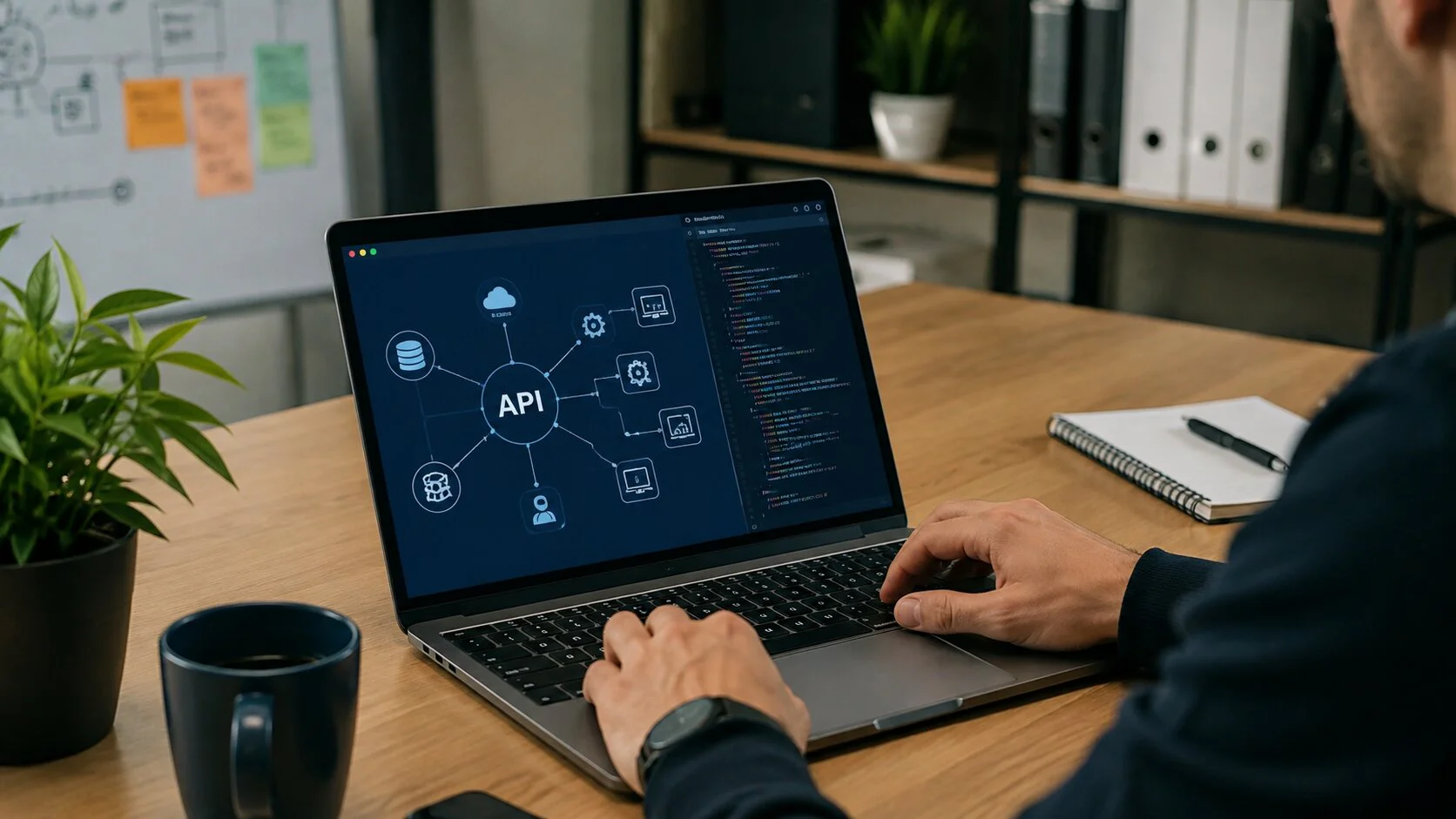
B2C platforms often prioritise high traffic, mobile performance, recommendation engines and digital marketing tools and B2B platforms prioritise workflow automation, enterprise security and system interoperability.Common B2B integrations include ERP systems, CRM platforms, inventory tools, accounting software and supply-chain systems.
A well-planned architecture allows data to move reliably between these systems. A poorly planned architecture can create manual work and operational errors as the marketplace grows.The correct technology stack should reflect catalog size, integration needs, user volume and future expansion goals.
Experienced ecommerce development services can help founders connect marketplace workflows with ERP, CRM, accounting and inventory systems without creating disconnected data processes.
User Experience and Mobile Design
B2C user experiences should be visually engaging and easy to browse. Large images, promotions, reviews and quick checkout options are common.
B2B interfaces need to improve productivity. Buyers may require dashboards, saved purchase lists, order histories, comparison tools and reorder functions.
Mobile expectations are also different.
A B2C mobile app encourages frequent shopping. A B2B app may help a manager approve purchases, communicate with suppliers or review inventory while away from the office.
Design should always support the user’s main task rather than imitate another marketplace.
Security and Compliance
Both marketplace types must protect personal data and payment information.
B2B platforms may also store contracts, supplier documents, negotiated prices and sensitive company records. They often need advanced authentication, role-based access, audit logs and encryption.
Some industries also require specific regulatory or data-management standards. Security should be planned during architecture design. Treating it as a final development task can expose the marketplace to avoidable risks.
Analytics and Marketing
B2C analytics commonly tracks conversion rates, customer behaviour, cart abandonment and product popularity.
B2B analytics focuses on supplier performance, account activity, order values, purchase frequency and procurement trends.
Marketing strategies also differ.
B2C marketplaces often use paid social media, influencer campaigns, discounts and referral programmes.
B2B platforms depend more on industry content, case studies, email outreach, webinars and account-based marketing.
Business buyers need information that demonstrates reliability and commercial value. Consumer buyers are more likely to respond to convenience and immediate benefits.
Development Cost and Scalability
B2B marketplaces are often more complex because they need organisational accounts, custom pricing, approval systems and enterprise integrations. However, a large B2C marketplace with millions of users can also require significant investment. Development cost depends on feature depth, custom design, mobile applications, integrations, security and infrastructure.
Scalability is also different. B2C platforms scale through higher traffic and more daily transactions. B2B marketplaces may scale through larger supplier networks, international operations and increasingly complex business workflows.
A focused MVP can reduce initial cost. However, its technical foundation should still support future growth. Choosing a scalable ecommerce website development strategy allows founders to launch essential marketplace features first while keeping the platform ready for future vendors, users and integrations.
How Founders Should Choose the Right Model
Founders should begin by answering several practical questions.
Who will purchase through the platform? How large will the average order be? Will buyers require quotations or approvals? Are prices fixed or negotiated? Which external systems must be integrated?
A B2C marketplace is usually suitable when the objective is to sell directly to a broad consumer audience through a fast shopping experience. While a B2B marketplace is more suitable when the objective is to connect companies, simplify procurement and support bulk transactions.
A hybrid model can serve both audiences. However, it requires separate pricing structures, account types and purchasing journeys.
Conclusion
The success of a marketplace depends on more than attractive design and basic ecommerce functions. It depends on how accurately the platform reflects the behaviour and expectations of its users.
Understanding B2B vs B2C marketplace development helps founders make better decisions about catalogs, pricing, payments, integrations and user roles. B2C platforms should prioritise convenience, speed and customer engagement. B2B platforms must support complex purchasing workflows, supplier relationships and enterprise operations.
Idiosys Tech provides custom ecommerce and marketplace development solutions for businesses planning B2B and B2C and hybrid digital commerce platforms. The company supports marketplace planning, UI and UX design, vendor management, payment gateway integration, inventory connectivity and scalable platform development. By combining technical expertise with business-focused development, Idiosys Tech helps founders build secure and user-friendly marketplaces that align with their operational requirements, customer expectations and long-term growth goals.
-------------------------------------------------------------------------------------------------------
What is the biggest difference between B2B and B2C marketplaces?
The biggest difference is the purchasing process. B2C purchases are usually made by individuals. B2B purchases often involve organisations, multiple decision-makers and formal approval processes.
What are the most important B2B ecommerce marketplace features?
Important features include company accounts, role-based permissions, bulk ordering, custom pricing, quotation requests, purchase approvals and invoice management.
Can one marketplace support B2B and B2C customers?
Yes. A hybrid marketplace can serve both groups. However, founders must provide different account types, prices, checkout flows and user experiences.
Is B2B marketplace development always more expensive?
Not always. Cost depends on complexity and scale. A small B2B platform may cost less than a large consumer marketplace with millions of users.
Which integrations are commonly required for B2B marketplaces?
Common integrations include ERP systems, CRM platforms, inventory management tools, accounting software and logistics platforms.
Sumit Kumar Paramanik
Senior Full Stack Web Developer, Idiosys Tech
A dynamic Senior Full Stack Web Developer and team lead, turns ideas into powerful digital solutions. Mastering both front-end and back-end, he inspires his team to deliver scalable, high-impact projects that elevate user experience.